
Patient stories.
Get real stories of people living with lung cancer.
Meet Julia.
Julia thought she was just out of shape. It was stage 4 ROS1+ lung cancer.
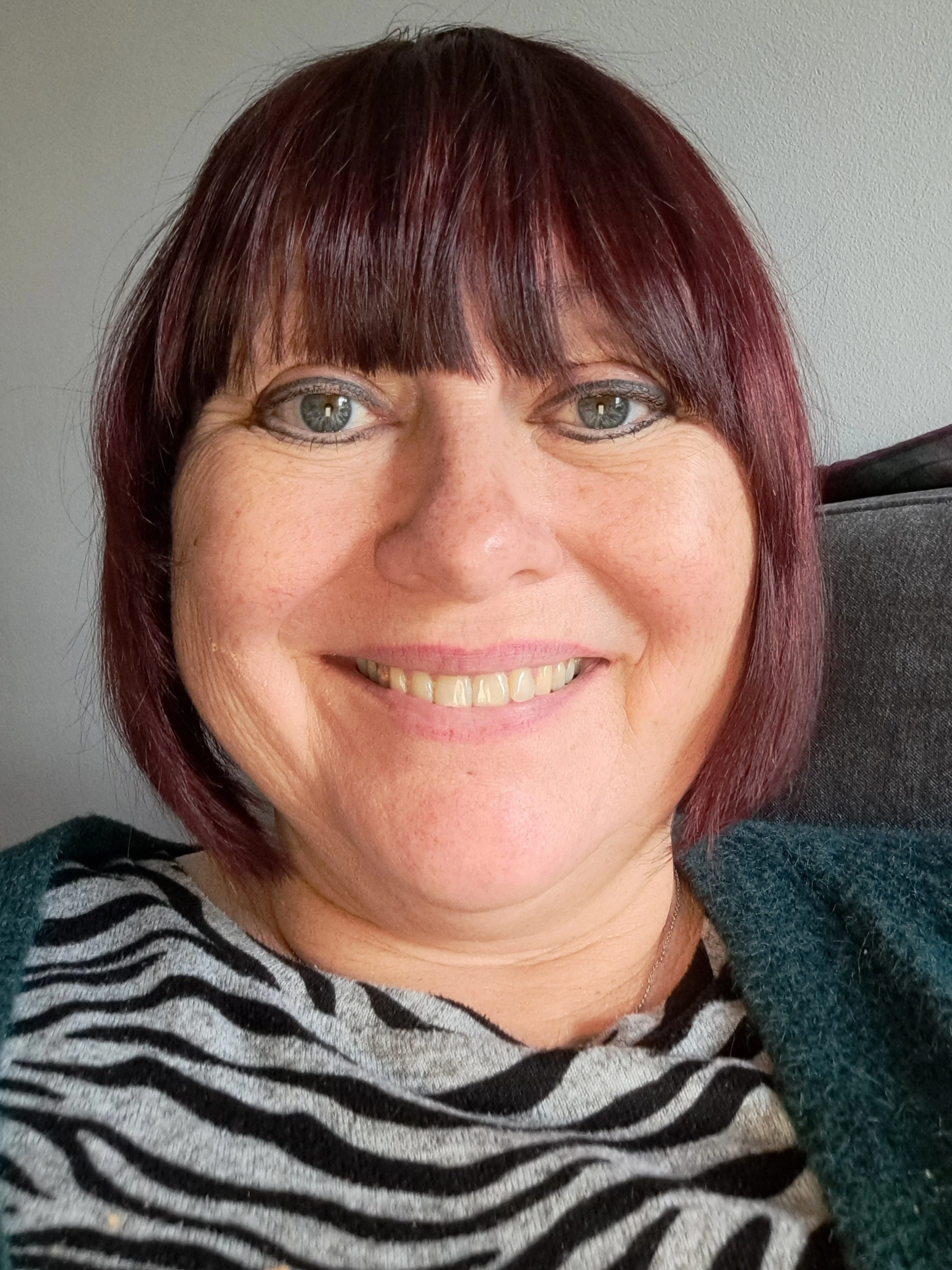

I was told nothing could be done. I said: no way. I’ve got three kids. I’m not having it.
The hill was the first clue. Julia Bunting had walked up it a thousand times — the steep incline between her home in Biggin Hill, Kent, and the school at the bottom where her three children spent their days. She had done it with pushchairs, with shopping, in every conceivable type of English weather. She had never once found it hard.
Then, somewhere in the autumn of 2015, she started getting breathless near the top. She put it down to missing her Zumba classes. Her daughters had switched dance studios, the timing clashed, and she had quietly let the class go. Of course she was a little out of puff. She was a 45 year old working mother of three. Just a little unfit.
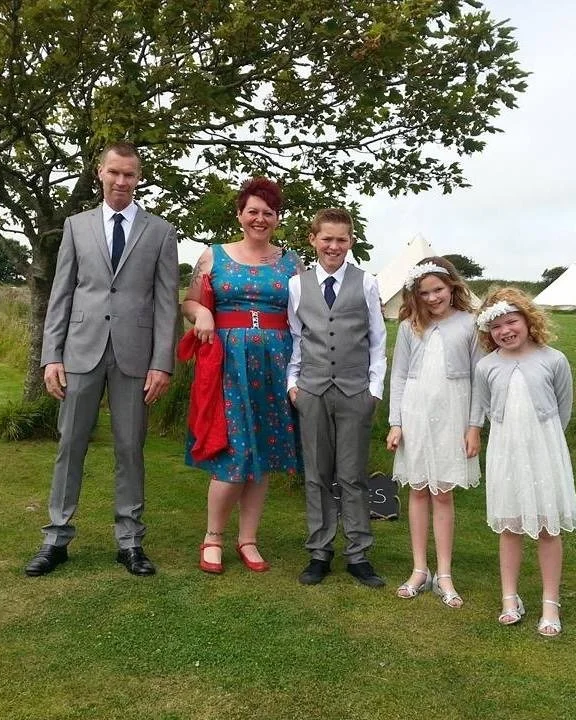
"As humans, we always make excuses for our bodies, don't we?" she says now, with a laugh that carries both warmth and hard-won wisdom.
What she did not know — could not have known — was that the breathlessness was not fitness. It was cancer. Stage 4. In both lungs. Untreatable, she would be told, by the standard measures. Palliative care only.
That conversation happened nearly a decade ago. Julia Bunting, now in her mid-fifties, is still very much here. And she has things to say.
Call an ambulance
The cough started innocuously enough. By early 2016, it had become the kind that would not leave. Her GP prescribed antibiotics — once, twice, then a third time. A chest X-ray came back clear. She was due to see the doctor again the very evening that everything changed.
She was at work when she felt it: a weight on her chest, sudden and absolute, like a tonne of bricks had been placed there without warning. She drove herself home and lay down. When her husband Gary arrived, he suggested she was lucky she already had a doctor's appointment that evening.
"Call me an ambulance," she told him.
At the hospital, being wheeled out from an X-ray, she caught a glimpse of the screen. Both lungs, white with shadow. She had worked in finance, not medicine, but she understood enough. She looked at the image and thought quietly to herself: I am not going home today.
She was right. It was double pneumonia. Eight days in intensive care followed, then a week more on the ward. Before she was discharged, the team had taken a sputum sample — a routine test, she assumed. It was not routine. Something had come back abnormal.
A cancer that hides in plain sight
The diagnosis that followed was both precise and bewildering. Julia had a rare form of lung cancer — one caused by a genetic rearrangement called a ROS1 fusion, a mutation found in just one to two percent of all lung cancer cases. Unlike a conventional tumour, which appears as a mass on a scan, her cancer lived inside the individual cells of the lung itself, dispersed like smoke, invisible to standard X-rays. The radiology looked like infection. For months, that is what everyone had assumed it was.
She sat in the oncology room, full face of makeup applied that morning — optimistic until the last possible moment. The consultant delivered the news with clinical directness. Stage 4. Palliative. There was a trial, however, if she wanted it.
She wanted it.
JULIA’S DECADE
A timeline
2015
Persistent cough begins; breathlessness climbing the hill. Repeated courses of antibiotics.
2016
Double pneumonia; 8 days in ICU. Sputum test flags abnormal cells. Diagnosed: Stage 4 non small cell lung cancer. Begins cisplatin chemotherapy clinical trial.
2018
Kidney damage halts chemotherapy. ROS1 biomarker discovered in notes. Begins targeted therapy: crizotinib.
2018–2024
Five to six years of stability on crizotinib. School runs, holidays, family life resumed.
2024
Leptomeningeal disease diagnosed — cancer in the fluid surrounding the brain and spinal cord. Double vision. Switched to lorlatinib.
2024–present day 2026
Eight-week scan: no evidence of disease in brain or lungs. Vision restores. Living on lorlatinib, scanned every three months.
Getting up every morning
The next two years were punishing in the way that chemotherapy always is. Cisplatin, then a maintenance drug called pemetrexed. Her kidneys began to fail under the chemical load. She had her gallbladder removed. She got up and got dressed every morning before her children went to school — even on the days when she would simply lie down on the sofa the moment the door closed behind them — because she needed them to see, every single day, that she was okay.
"Even when I was rock bottom," she says, "I got up."
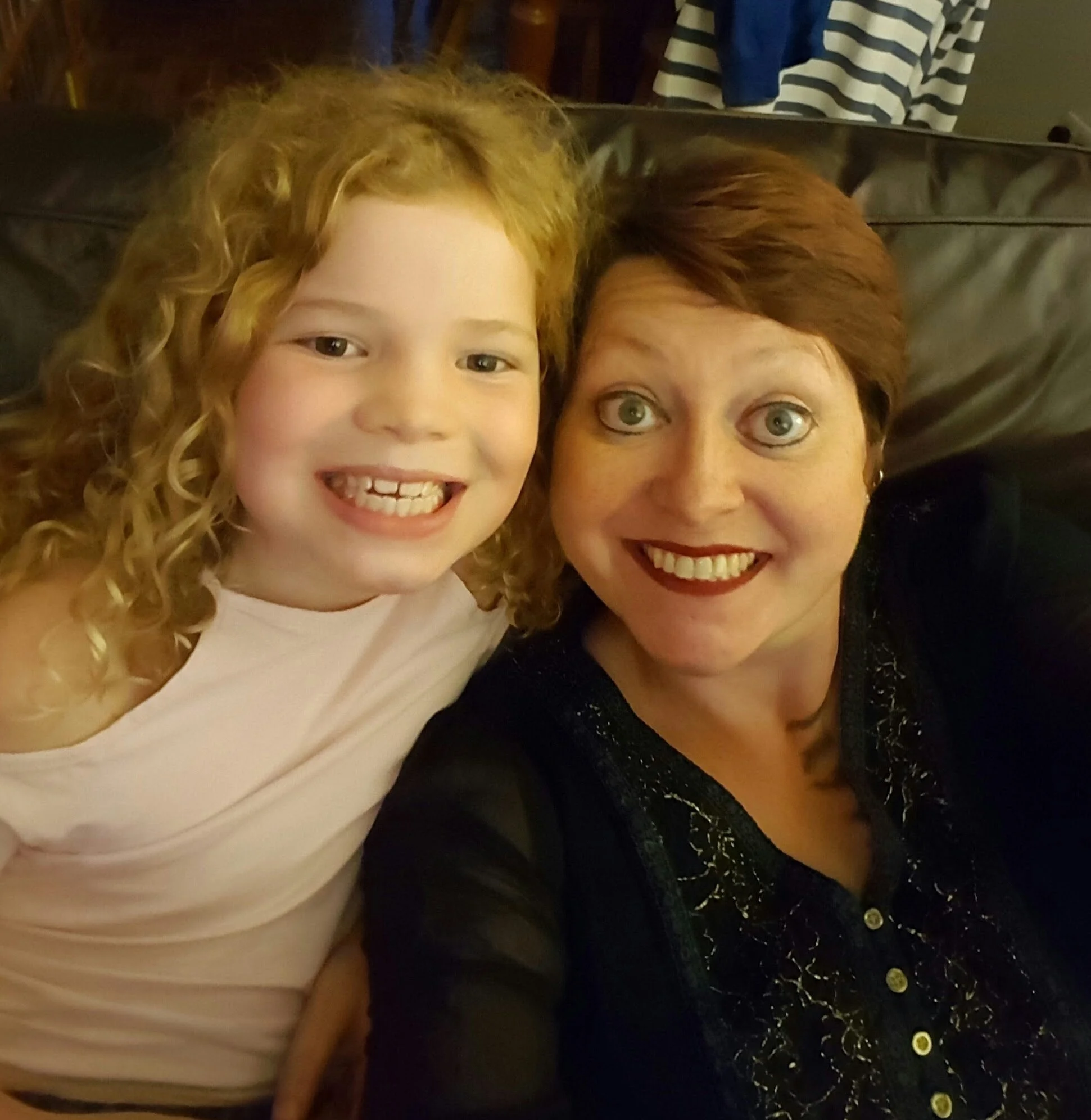
Her youngest, Esme — seven years old when this began — would occasionally wander up to Julia and ask, without particular drama: "You still got cancer?" Julia would say yes. Esme would say okay, and wander off again. Children are, Julia reflects, surprisingly good at holding difficult truths lightly when the adults around them hold them steadily.
It was during this period that Julia's new oncologist made a discovery buried quietly in her notes. When the biopsy had been sent to America to assess trial eligibility, the lab had detected something: a ROS1 fusion gene. Nobody had mentioned it. The paperwork had moved on and the finding had sat there, unactioned, for two years.
The biomarker news arrived as her kidneys were failing and the chemotherapy was becoming untenable. "This is good news, in a way," her oncologist told her. It meant there would be other options. Targeted therapy. A pill, not an infusion. Something far kinder.
After chemo, Julia spent roughly 10 months off treatment, watching and waiting to give her kidney and body time to recover. Then the cancer started growing again in 2019, and she was started on crizotinib — a targeted therapy designed specifically for ROS1-positive tumours. She took it for nearly six years. She went on holidays. She watched her children grow into teenagers. She lived, in the most ordinary and extraordinary sense of the word.
KNOW YOUR BIOMARKER
ROS1+
1–2% of all lung cancers carry the ROS1 fusion — the rare biomarker driving Julia's disease, which has no known risk factor or behaviours.
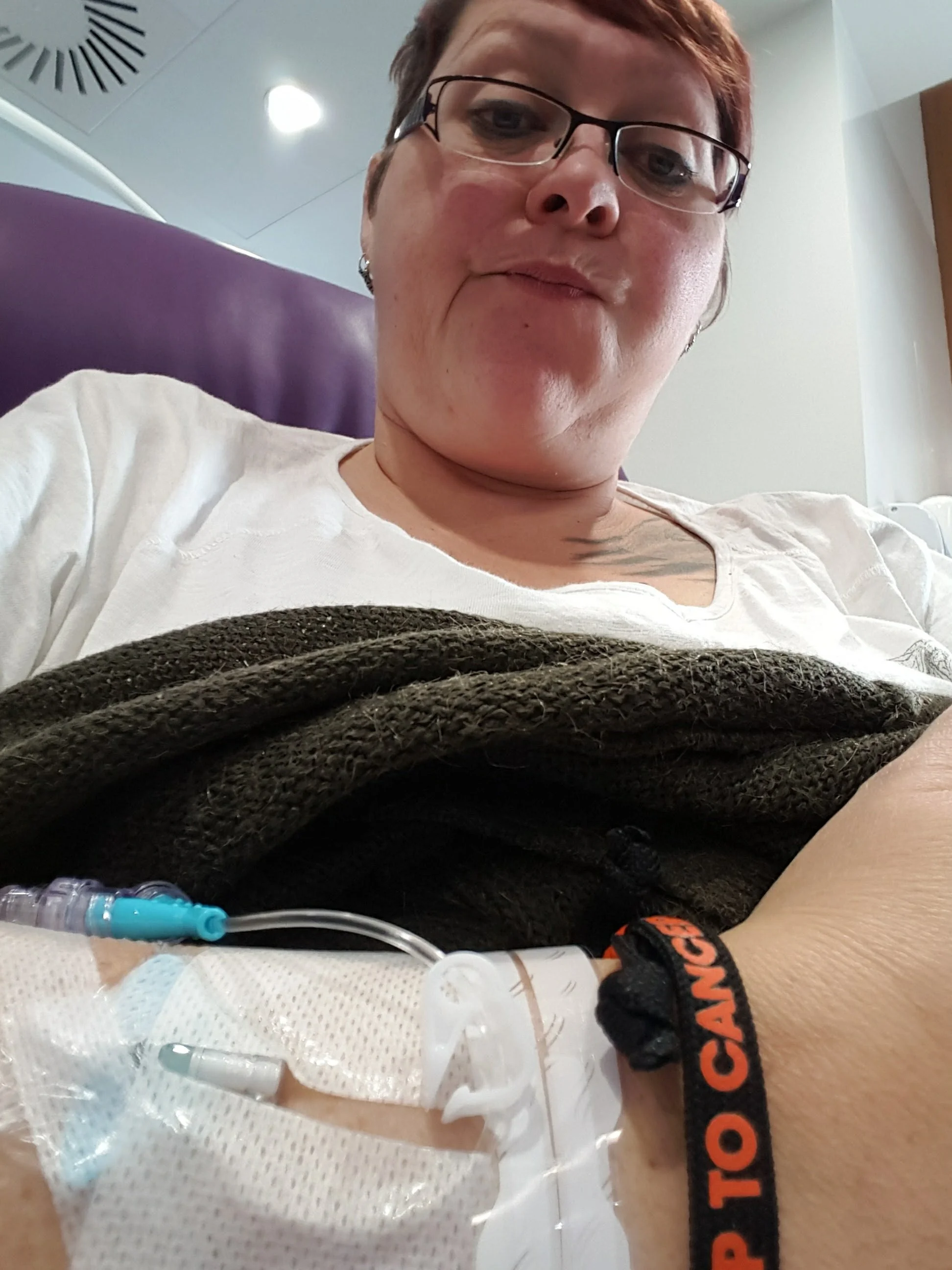
The dizziness that changed everything - again
But then came the dizziness in 2024. Julia was doing yoga with a friend when she kept losing her balance, stumbling on the mat. She had been doing the Epley manoeuvre, a type of exercise designed to help to treat vertigo, convinced it was an inner ear problem. Eventually, a friend persuaded her to call her clinical nurse specialist.
Julia was told to go straight to A&E (accident & emergency). They were waiting for her.
A CT scan found nothing. She slept in a chair through the night. By the following day, while still in A&E, her vision failed. She could not see out of both eyes at once. The double vision forced one eye closed.
An emergency MRI followed. The images were sent to a specialist at King's College Hospital, compared against a previous scan. The result came back: leptomeningeal disease (LMD). This meant that cancer cells had found their way into the fluid surrounding her brain and spinal cord — one of the most feared complications in oncology, notoriously difficult to treat.
Julia’s lungs, meanwhile, were stable. The cancer had not advanced there. It had simply found another route.
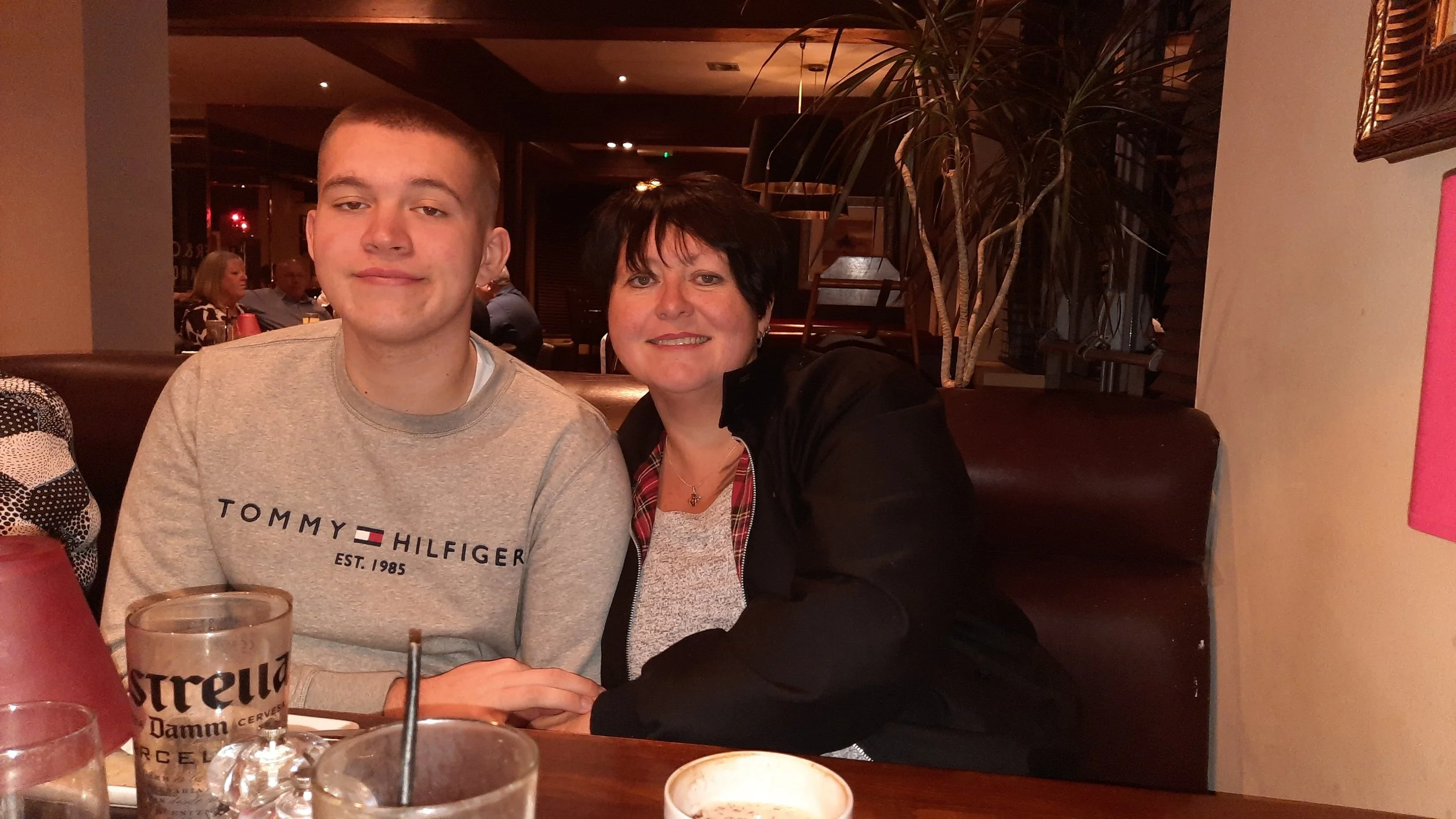
Within my eight-week scan, there was no evidence of disease in the brain or the lungs. That was the first time in eight years the lungs had been clear.

One morning, she could see
Her oncologist moved quickly. He applied to NHS England for entrectinib and this was rejected as its only a first line option in the UK. The only alternative left was to apply for lorlatinib on compassionate grounds through Pfizer — a next-generation targeted therapy — drawing on paperwork he had already prepared for another patient, a friend of Julia's who had recently died. The application was approved. Julia started the drug.
Eight weeks later, her scan showed no evidence of disease in her brain or her lungs. For the first time in eight years — through all the chemotherapy and the crizotinib and the pneumonia and the ICU and the leptomeningeal diagnosis — her lungs were entirely clear.
The vision, doctors told her, would likely be permanent. The damage was done.
Then one morning, three to four months after starting lorlatinib, she woke up and opened both eyes.
She could see.
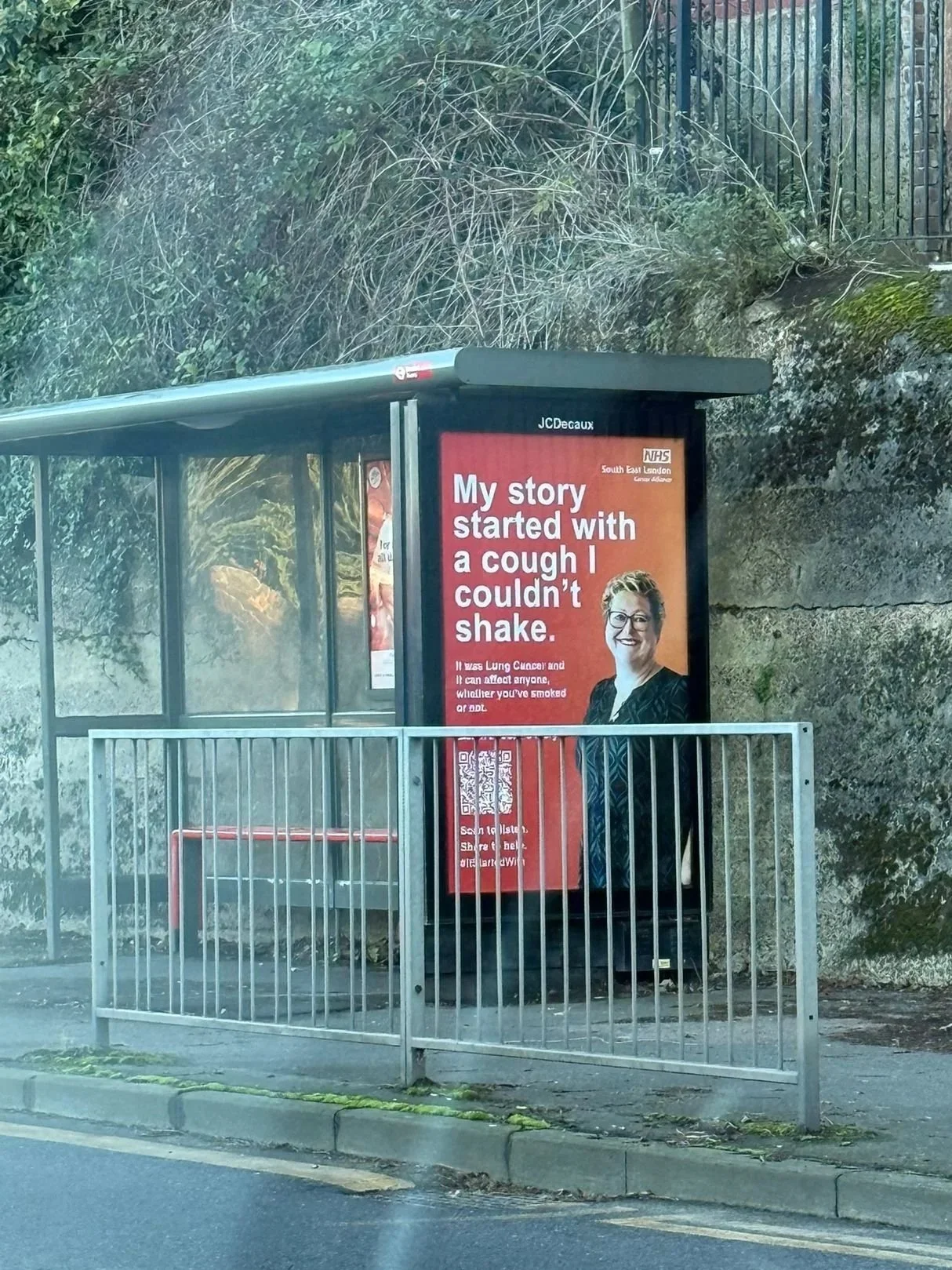
Grief, gratitude and the coffee upper lung club
There is a group Julia belonged to, formed through a lung cancer charity called Every Breath. Six women, bound by shared diagnosis, who called themselves the Coffee Up a Lung Club. Within two months, three of the six were gone.
"That can be the way it is with lung cancer," she says, with neither bitterness nor false brightness. Just acknowledgement. She has learned to hold grief and gratitude in the same hand.
Julia is scanned every three months now. She manages the weight gain that lorlatinib is known to cause — cutting bread, counting calories, trying to outmanoeuvre a drug whose benefits vastly outweigh its inconveniences. Her cholesterol is high; she takes statins. The fatigue is real. She takes the pill every morning and keeps going.
Esme, her youngest, is now at college studying travel and tourism. For more than half her life, her mother has had cancer. She grew up alongside it, as children do — absorbing, adapting, continuing.
You will laugh again
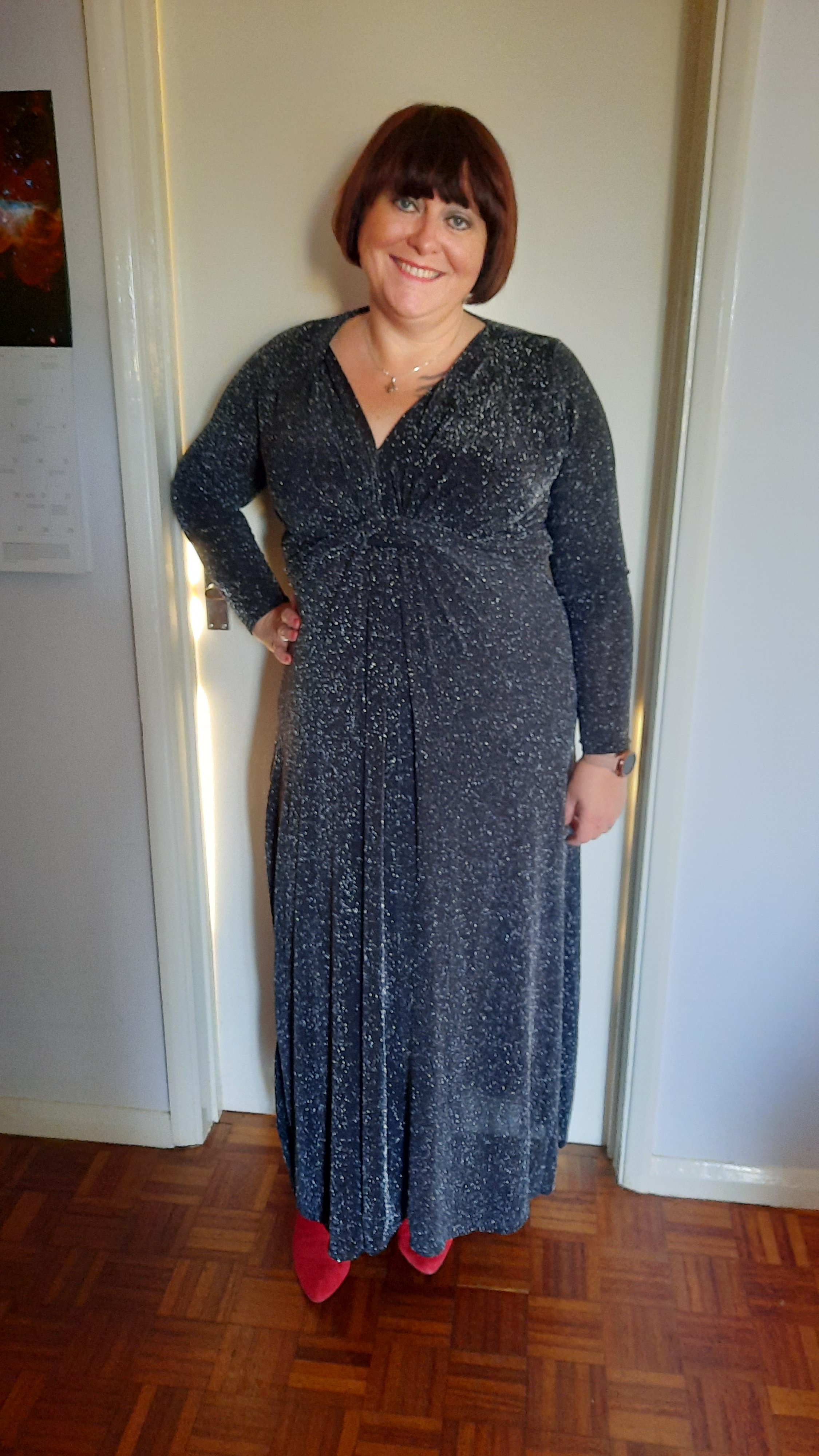
Reflecting on her diagnosis, she offers advice to those newly diagnosed: "There'll come a time when you'll wake up and it won't be the first thing you think about. You will laugh again."
"Our kids take the mickey out of me about it now. That's just how we've got through it. And it works for us."
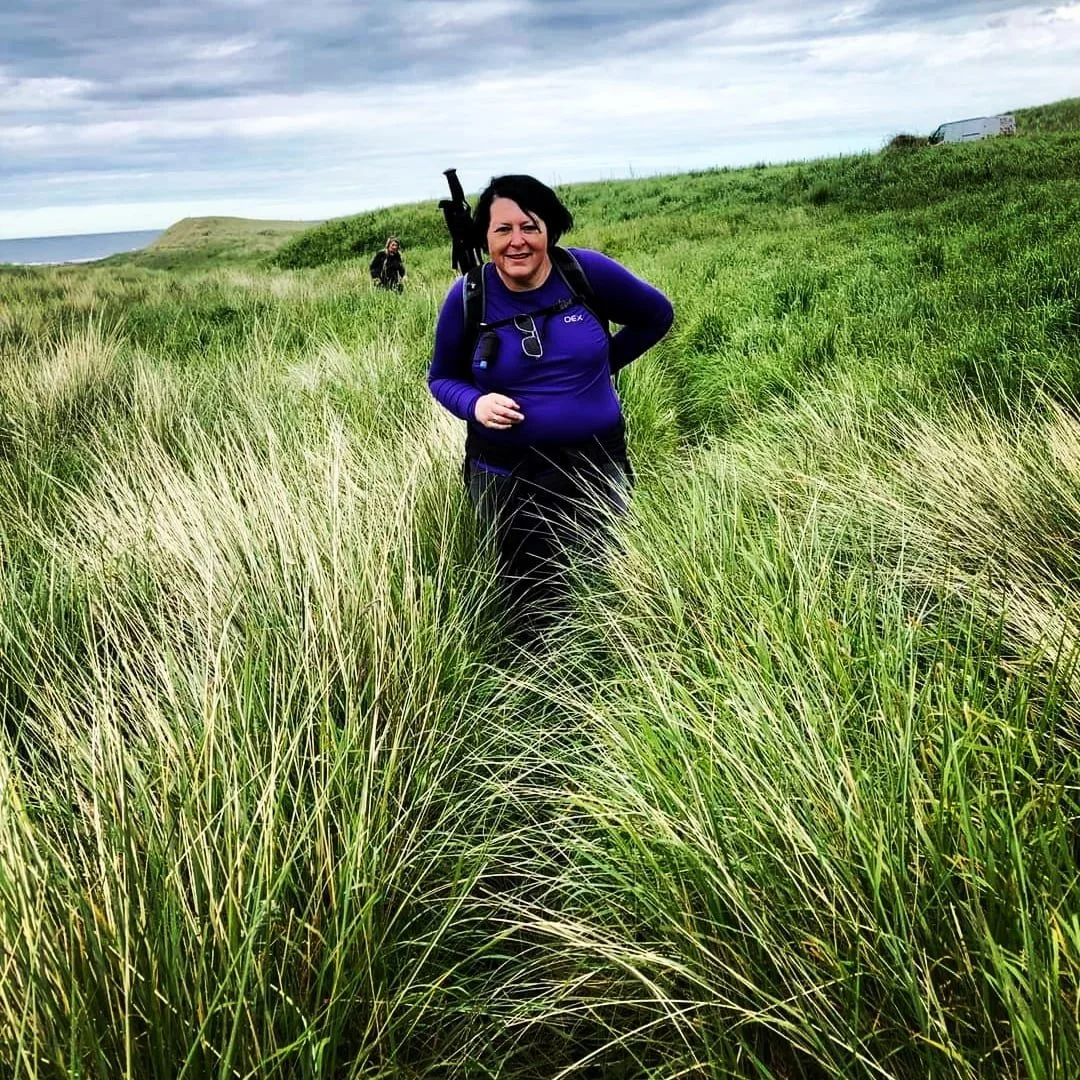
Outside, the hill is still there. She still lives at the top of it. But she walks up it. Every day, she walks up it.
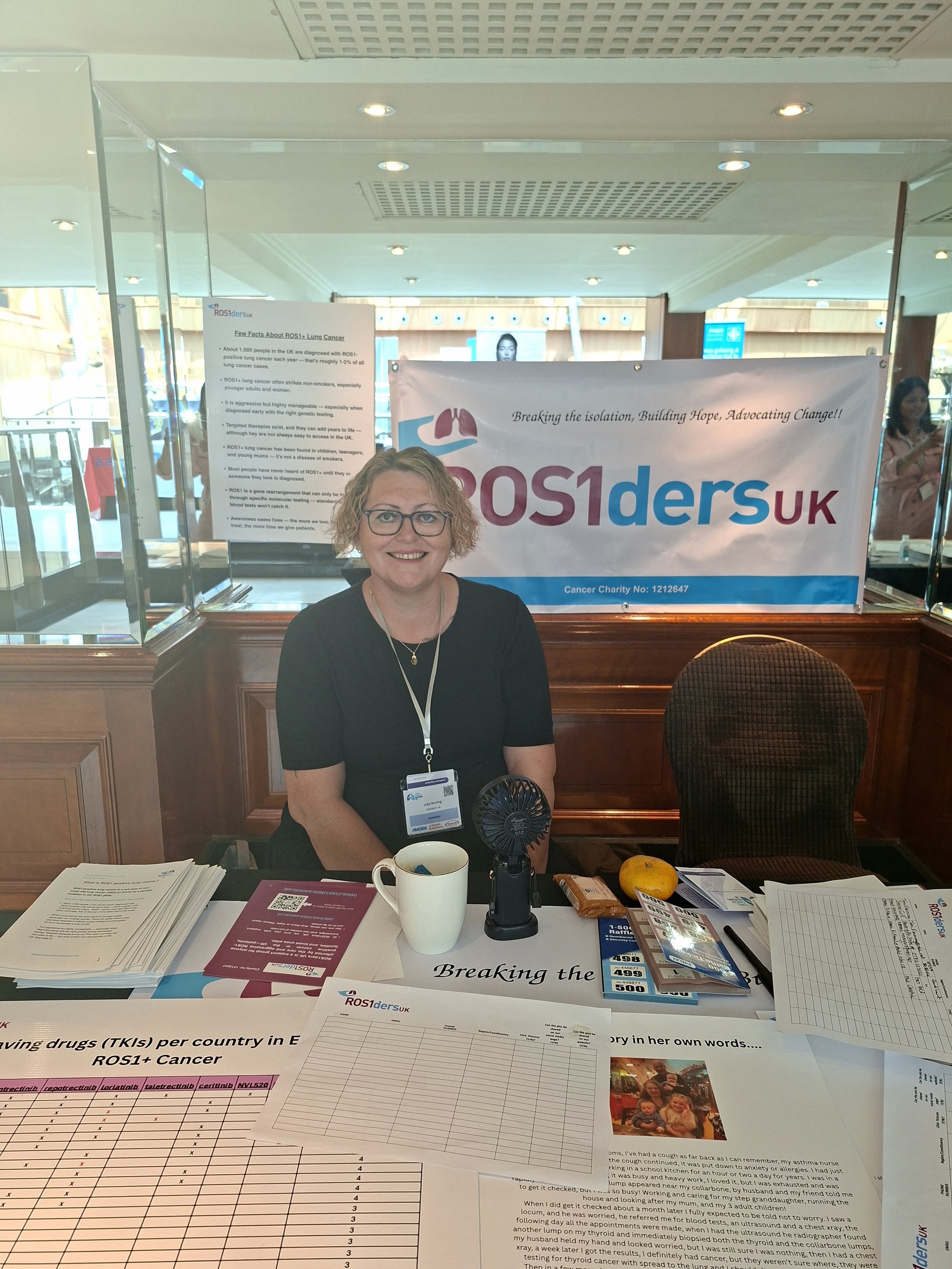
Julia serves as Treasurer & Board Member of ROS1ders UK, a fast-growing charity of patients and carers in the UK, working to improve the prognosis and raise the standards of care for patients diagnosed with ROS1-positive cancer. Learn more about them here.
April 2026
Watch Julia’s Patient Voices podcast interviews.
Julia thought she was unfit. It was stage 4 ROS1+ lung cancer.
Julia’s lung cancer spread to her brain. It was Leptomeningeal disease (LMD).
Julia speaking on the hope in lung cancer.