Chemotherapy.
Get real stories of people living with lung cancer.
Chemotherapy in lung cancer.
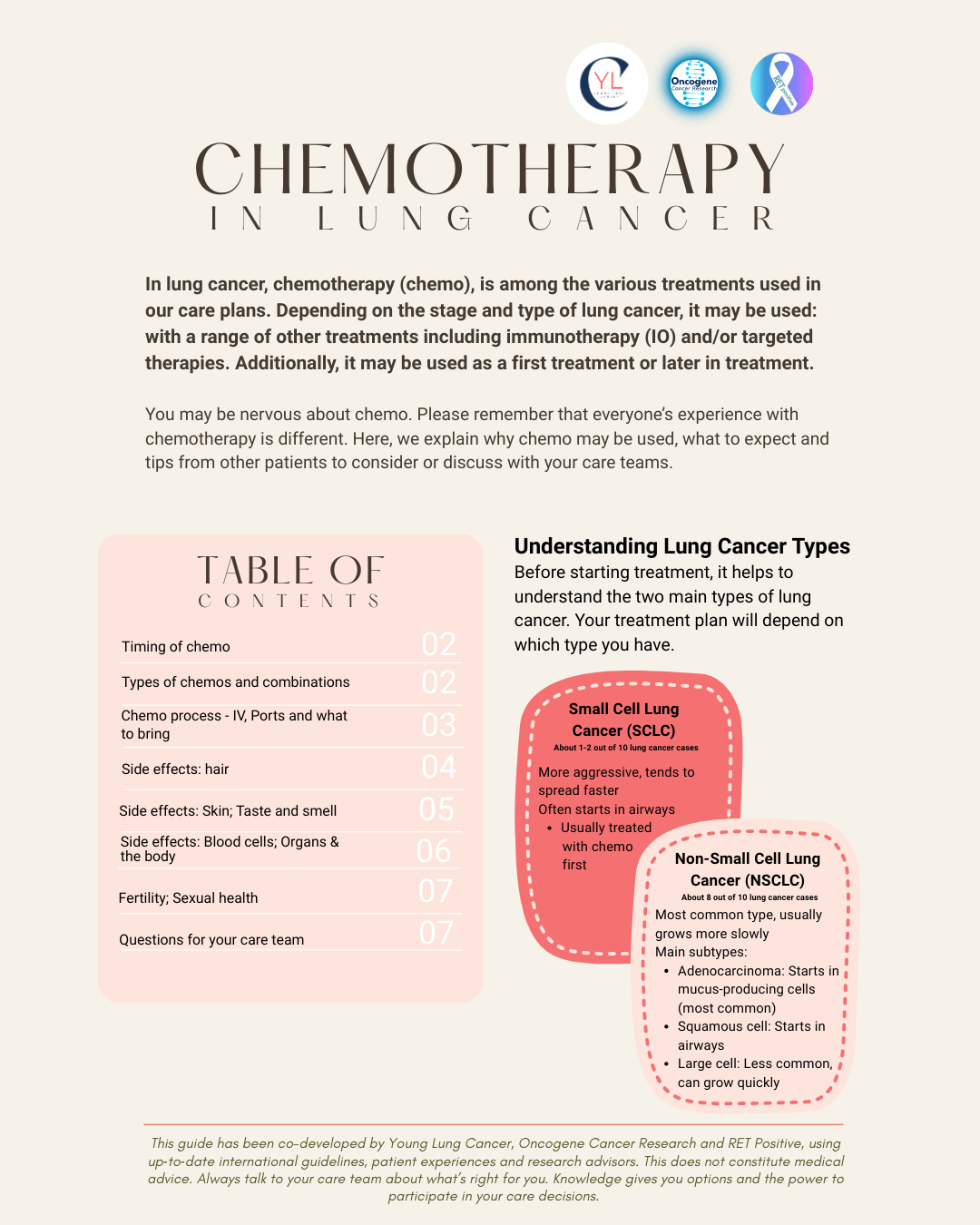
In lung cancer, chemotherapy (chemo), is among the various treatments used in our care plans. Depending on the stage and type of lung cancer, it may be used: with a range of other treatments including immunotherapy (IO) and/or targeted therapies. Additionally, it may be used as a first treatment or later in treatment.
You may be nervous about chemo. Please remember that everyone’s experience with chemotherapy is different. Here, we explain why chemo may be used, what to expect and tips from other patients to consider or discuss with your care teams.
This information and our detailed guide has been co-developed by Oncogene Cancer Research, Young Lung Cancer Initiative and RET Positive, using up‑to‑date international guidelines, patient experiences and research advisors. This does not constitute medical advice. Always talk to your care team about what’s right for you. Knowledge gives you options and the power to participate in your care decisions.
Timing of cancer treatments.
Your treatment plan is based on your general health, the stage and size of the cancer, and whether the cancer has specific genetic changes. This helps your medical team decide which treatments are most likely to help you, and when they should be used.
Chemo and other treatments may be used at different points in lung cancer care:
Before surgery or radiotherapy (neoadjuvant treatment)
Chemotherapy, immunotherapy, or targeted therapy may be given before surgery or radiotherapy to shrink or control the cancer and improve the chances of successful surgery.
After the main treatment (adjuvant treatment)
Additional treatment may be given after surgery or chemo-radiation to reduce the risk of the cancer coming back.
As the first treatment for advanced lung cancer
Chemotherapy, immunotherapy, targeted therapy, or a combination may be used. (Important note: IO is contraindicated for most biomarkers.)
To help with symptoms (palliative chemotherapy)
When cancer is very advanced, chemotherapy may be used to reduce symptoms and improve quality of life, rather than to cure the cancer. This can help you feel more comfortable and manage pain or breathing difficulties.
Later in treatment
If a treatment is no longer effective (often called progression), your team may recommend a different option, which may include chemo or combinations.

Intravenous (IV) infusion – Most common method
Given through a drip into a vein
Usually takes place in a clinic or hospital treatment room
Sessions last 2-6 hours, depending on the drugs
When drugs are combined, they're usually given one after the other during the same visit
Oral chemotherapy
Taken as pills at home
The chemotherapy process
What to expect.
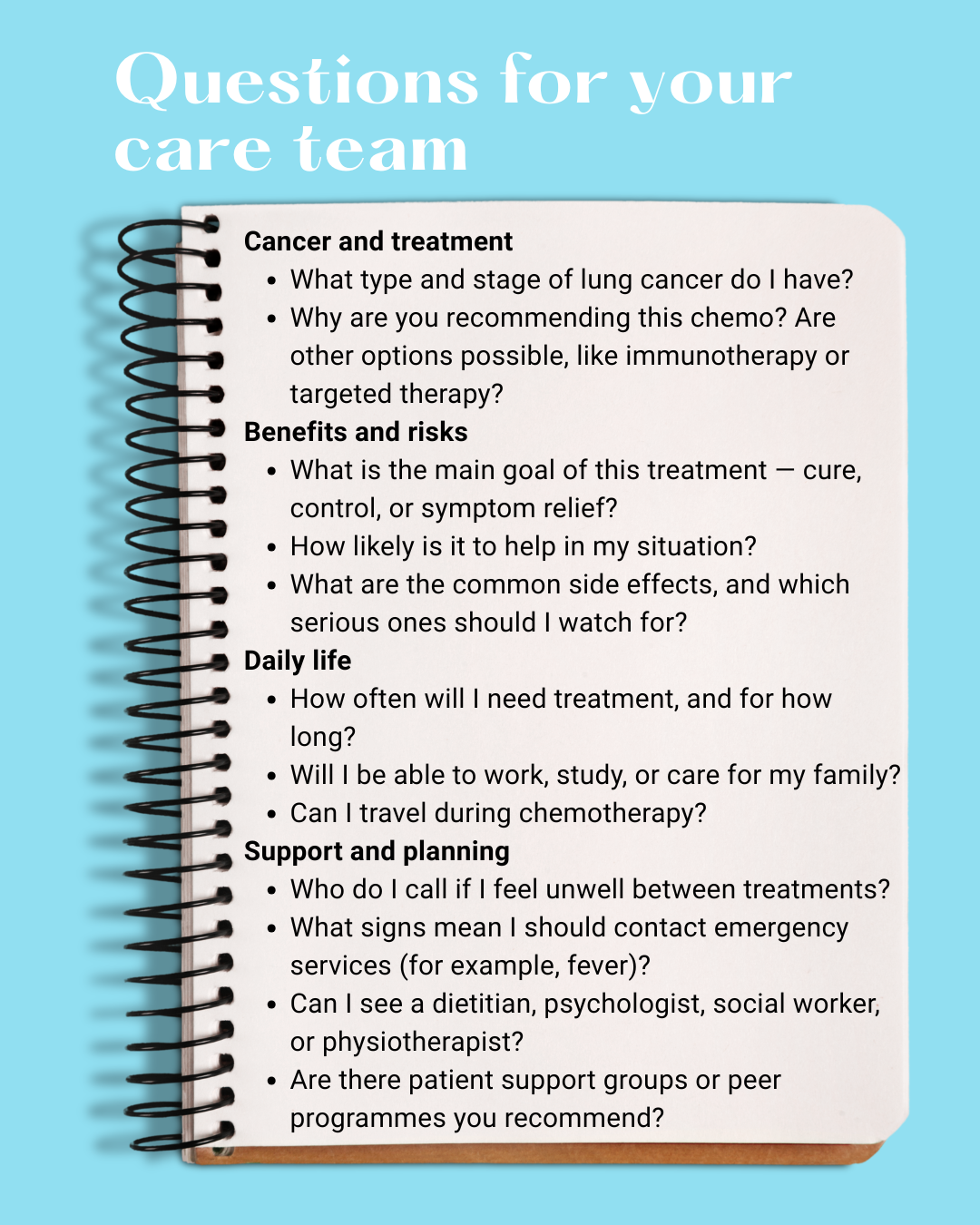
Understand side effects and what to expect on everything from hair, skin, organs, taste and advice on publicly available resources by downloading the full guide from Oncogene Cancer Research, Young Lung Cancer Initiative and RET Positive.