
Patient stories.
Get real stories of people living with lung cancer.
Meet Joanne.
Joanne was told it was terminal small cell lung cancer.
Five years on, she’s still here.
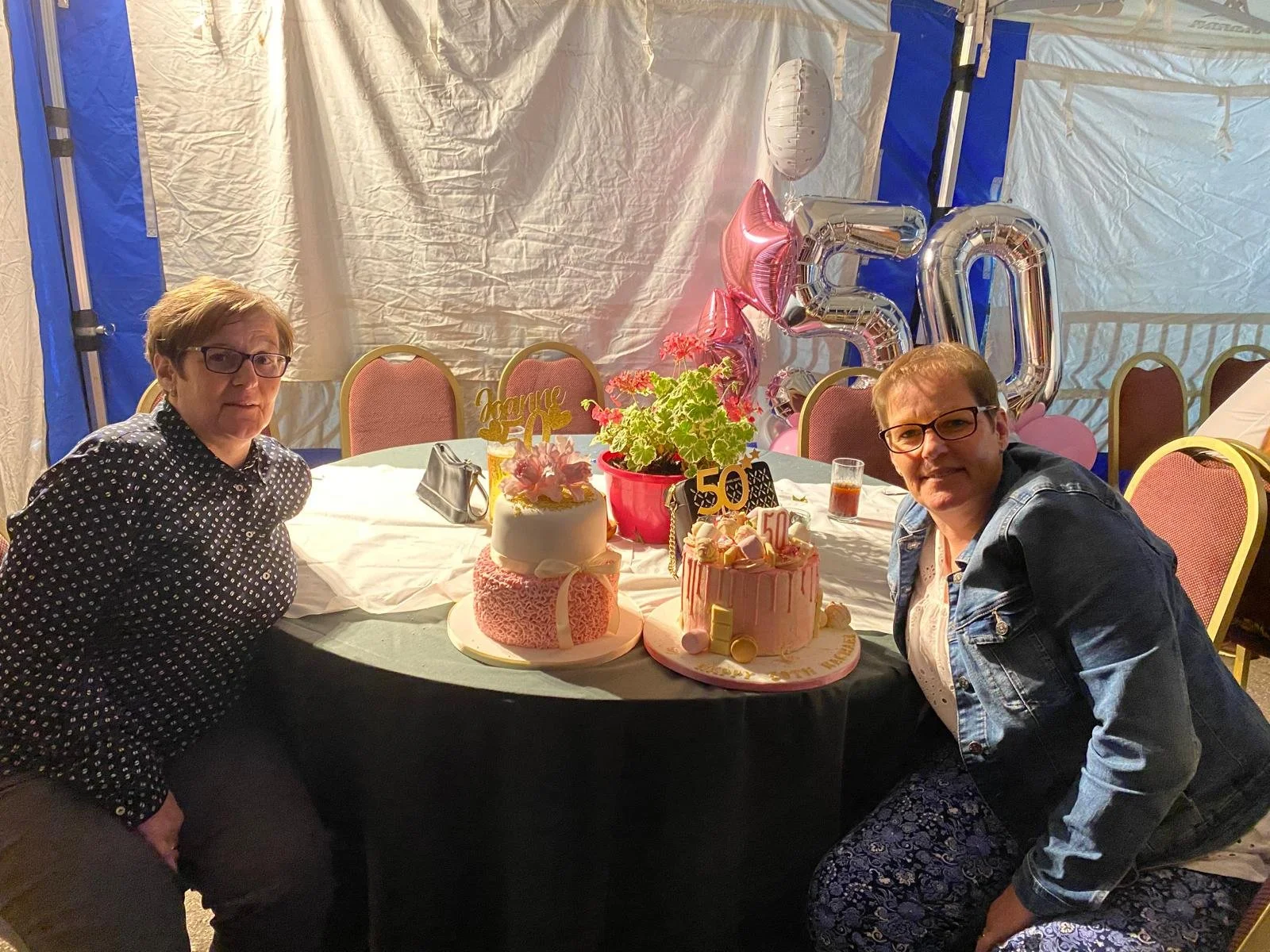
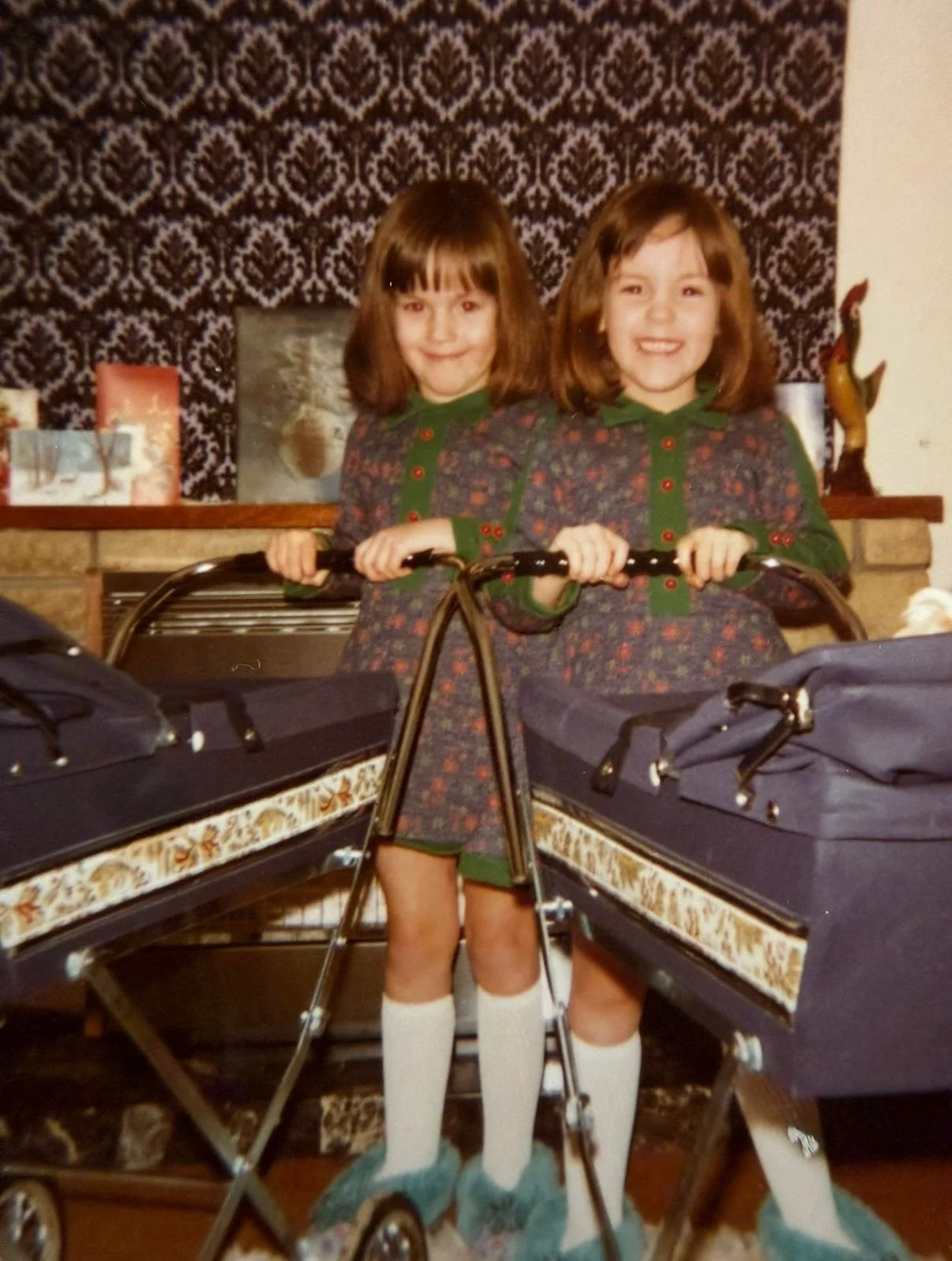
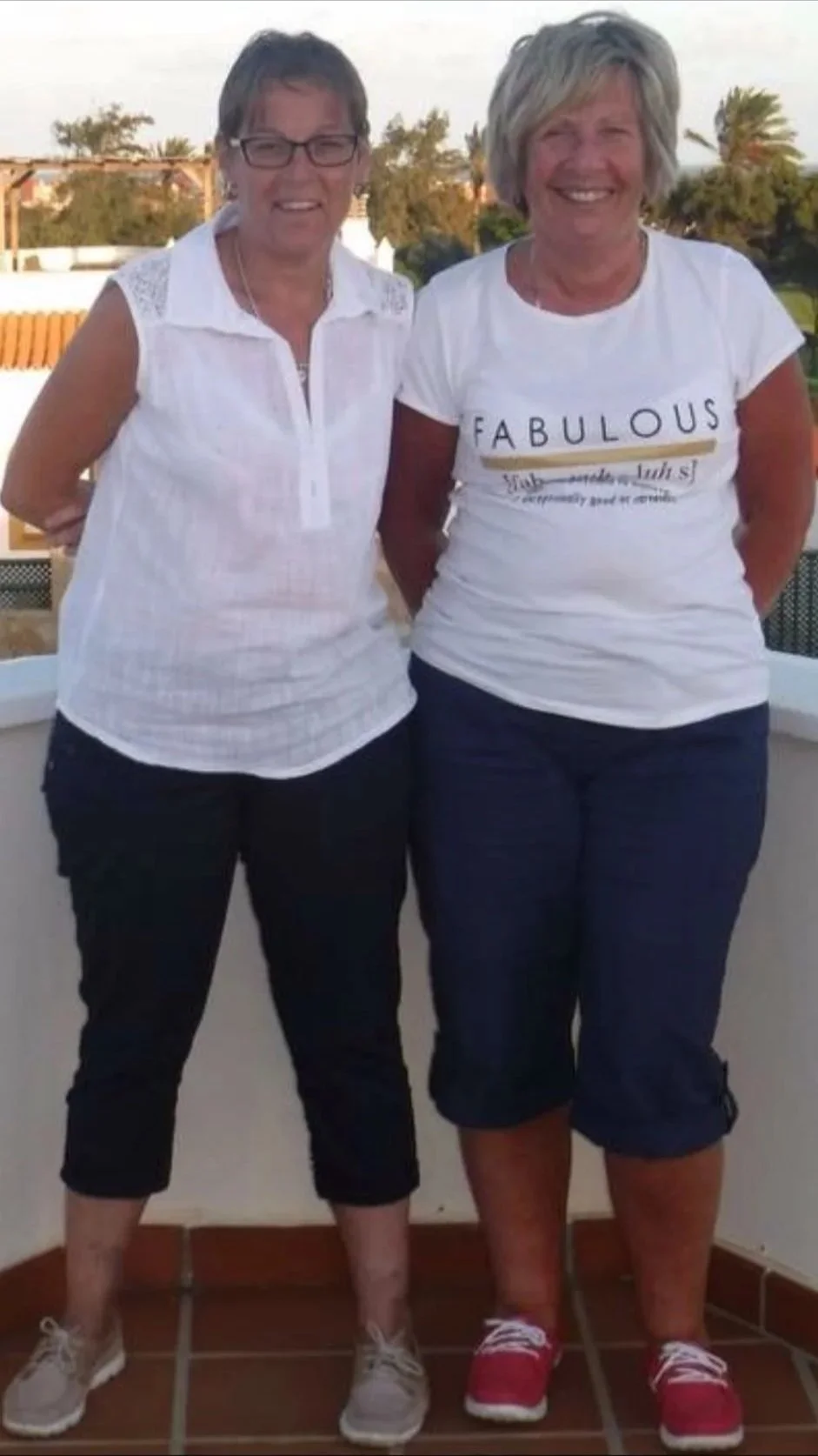
Joanne (left), celebrating her 50th birthday with her identical twin I had assumed all my symptoms were laryngitis or something that would pass. I never expected terminal lung cancer.

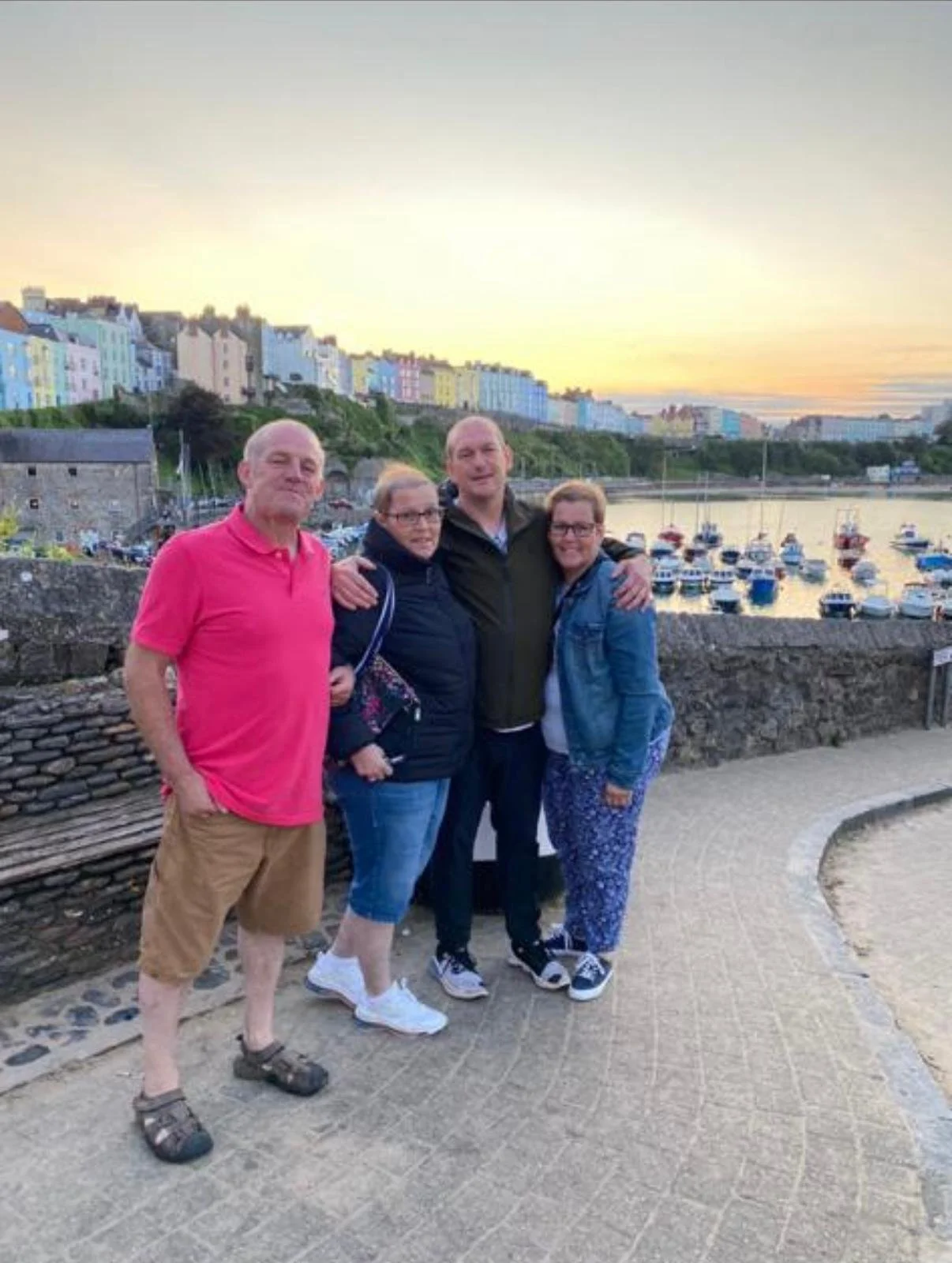
Joanne and siblings on holidayJoanne Peake grew up in Cwmbran, South Wales, in the kind of close-knit family that most people only read about. One of her two brothers lives next door. Her identical twin sister lives across the road. Still inseparable, she and her twin Rachael receive identical birthday presents from their family every year.
The Peake family has been part of the fabric of their community for generations. The family business – a funeral home – has been serving the people of Cwmbran for 108 years over five generations. Joanne works there full-time, and lives just two minutes from the door.
Joanne has spent her life around grief, the Peakes supporting families through loss and heartbreak. But nothing prepares you for hearing those conversations become your own. Yet still, when she was diagnosed with extensive-stage small cell lung cancer in February 2021 at just 50 years old, her response was pragmatic. “I am going to keep showing up.”
"From the time I was told I had extensive stage small cell lung cancer," she says, "I just thought – I've got to listen to my consultants but also I’ve got to get on with life. Because you can't just let it get to you."
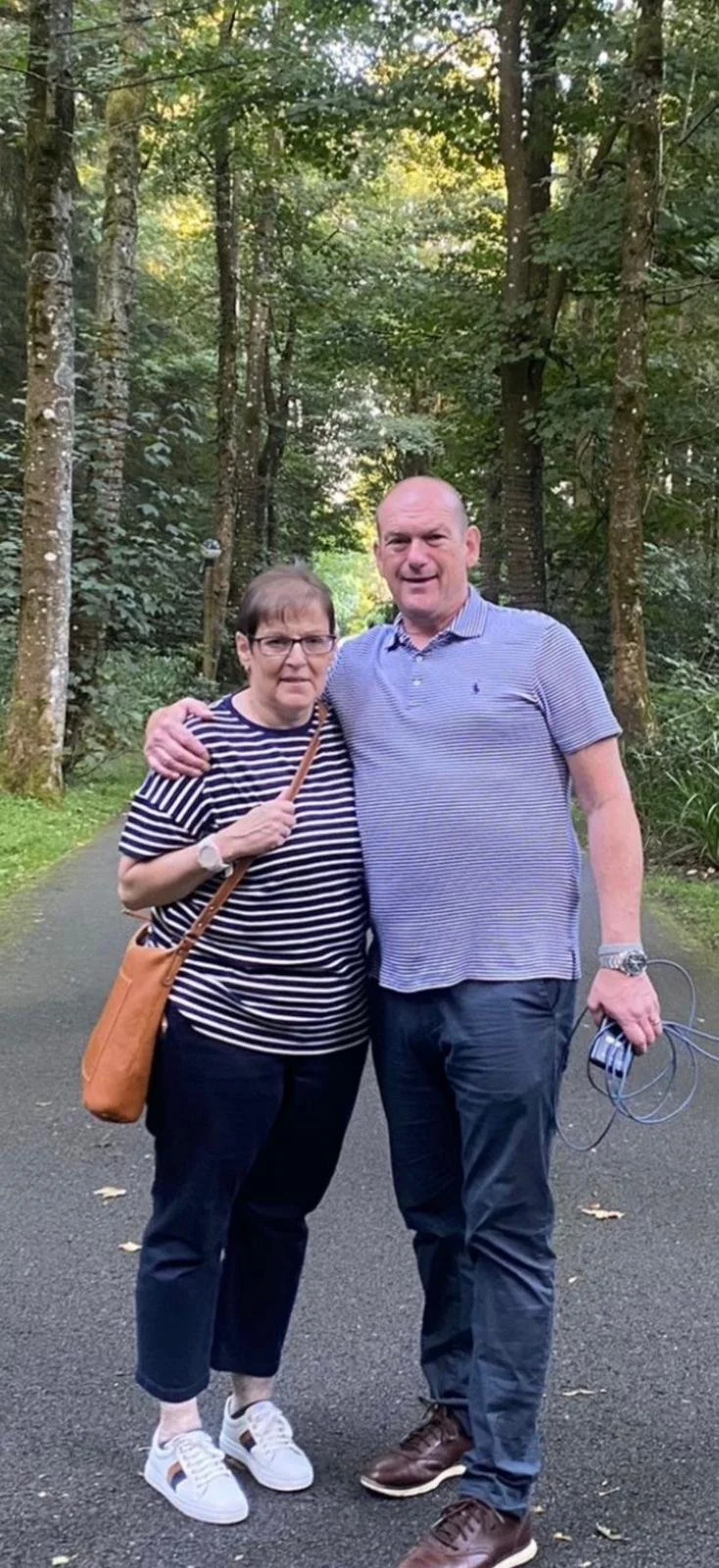
With her brother Kerrie who encouraged her to see a doctorSomething was very wrong
It all started in December 2020. Chest pains and headaches so severe that she didn't know what to do with herself. Her voice was fading and she started coughing up blood. Not one to make a fuss, Joanne carried on working, assuming it was laryngitis, or flu, or something that would pass. By February, she could barely speak and could not walk more than two or three steps without losing her breath.
It was her brother Kerrie who finally told her she needed to see a doctor. She went on 11 February. Her GP listened to her chest, hearing it rattling, he sent her straight to hospital. By the following morning, after a night of scans and tests – alone, because this was the height of the COVID pandemic – she had her answer. There was a mass on her left lung.
She was home by 6am. As she walked through her front door, the cancer nurses from the hospital were already on the phone. Within a fortnight, she had a biopsy. By the beginning of March, she had started treatment.
"While the diagnosis was an almighty shock, I couldn't fault the way everything was dealt with," she says. "My team was quick and very comforting, so supportive. When you are frightened, having a strong, confident team with you makes it possible to keep going.”
When she went back to receive her biopsy results, Joanne brought her sister-in-law Lisa. "I just knew I couldn't take it all in on my own." The consultant and the cancer nurse sat with them. Extensive stage small cell lung cancer. Too advanced to operate. Terminal. All they could do was treat it.
"That's when I fell apart," Joanne shares.
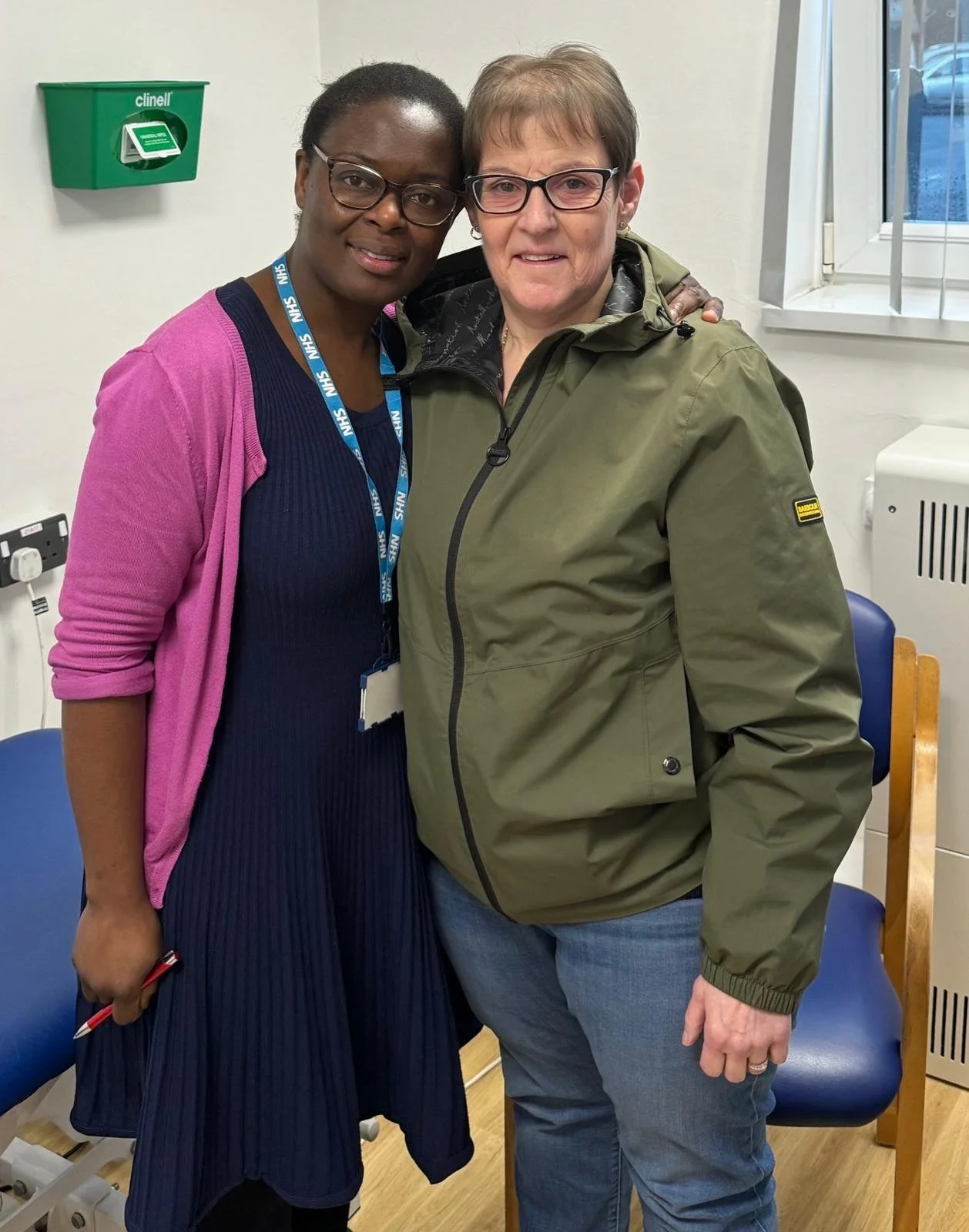
With Dr Clara Namelo, Joanne’s adored oncologist for 3.5 yrsSNAPSHOT
SMALL CELL LUNG CANCER (SCLC)
SCLC is a fast-growing, aggressive lung cancer representing 10–15% of cases. While often linked to smoking, it can affect anyone. SCLC is staged differently from non-small cell lung cancer (NSCLC).
Limited-stage (LS): Found in only one lung and nearby lymph nodes. Treatment with chemo and radiation is given with curative intent.
Extensive-stage (ES): Spread beyond the original lung, to the chest area or to other parts of the body. Treatment can include chemo, immunotherapy and radiotherapy and focuses on managing the disease and extending life.
Note for oncogene patients: Some NSCLCs can transform into SCLC to bypass targeted therapies. This requires a new biopsy and a shift in treatment strategy.
Getting on with it
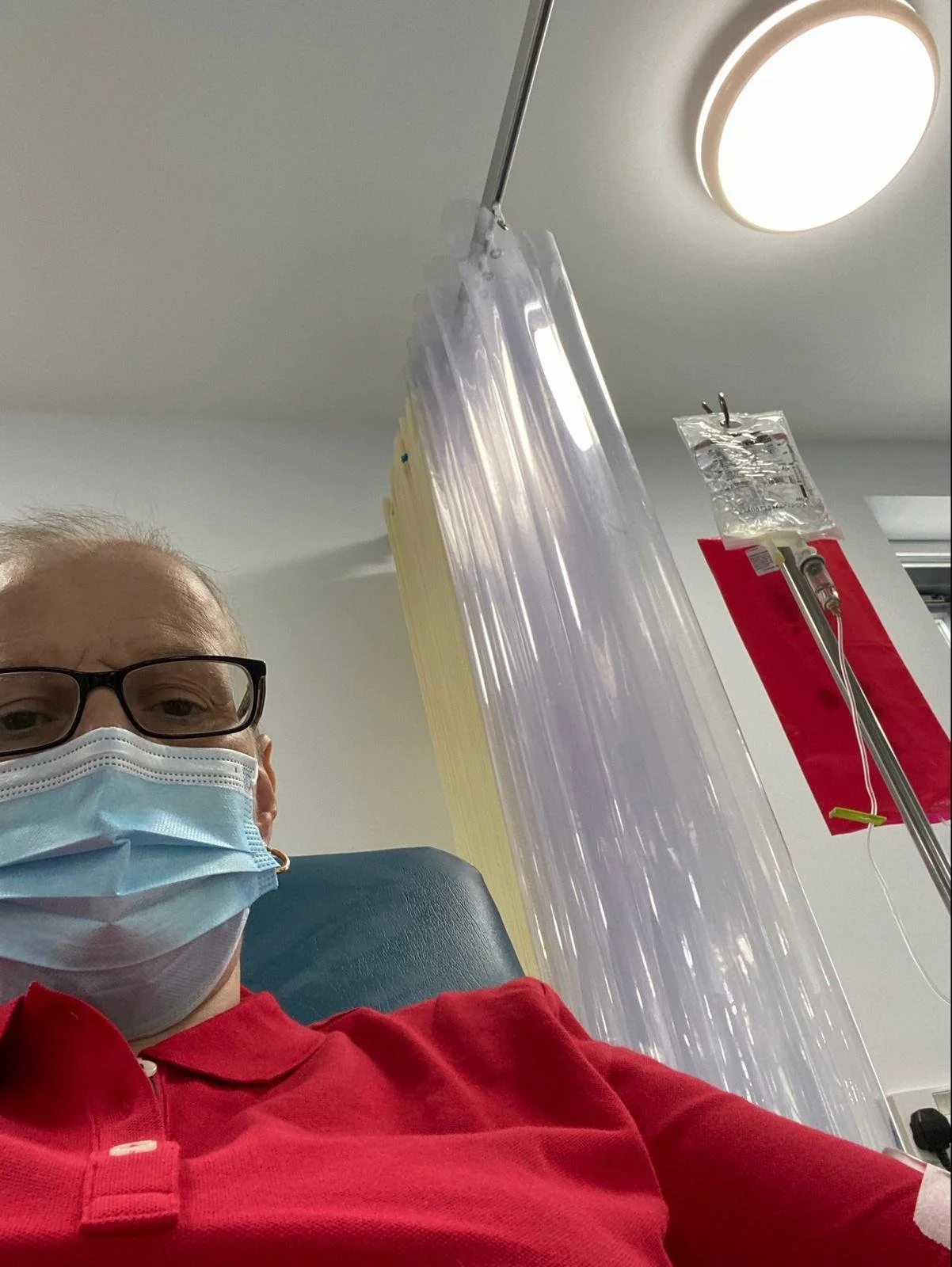
Joanne started on a triplet regimen of intravenous chemotherapy and immunotherapy: carboplatin, etoposide, and atezolizumab. Four intensive rounds, then 22 further sessions of maintenance immunotherapy. She lost her hair — but not all of it. She was exhausted in a way she had never experienced before. But the side effects were milder than she had feared.
"You read so many stories of those violently sick, constant diarrhoea, so much more. I was just very, very tired. I felt grateful it wasn’t worse."
Three months later, Joanne went back to work. "I was so bored at home. I’ve worked since I was 15, from working in a news agents, then deciding 13 years ago to go and work in the family business." It is a job she loves, a business she is proud of, a community that the Peake family has served for decades. Her consultant told her to ease in gently. She went back the following week. "If I'm not feeling 100%, my brother's very understanding. But I push myself every day to try and do something."
Joanne had to stop the immunotherapy early — it was worsening her emphysema. Since September 2022, she has received no active cancer treatment. Her tumour has remained stable. Every three months, she has a scan. Two recent scans have found new nodules on the lower part of her lung, which are now being monitored. The team is also watching a benign tumour on the left side of her brain, present since her diagnosis.
"My team hasn’t been too worried about the nodules," she says. "So I haven’t been worrying either."
People think you look fine. But nobody knows what goes on inside. How you cope mentally, day-to-day.
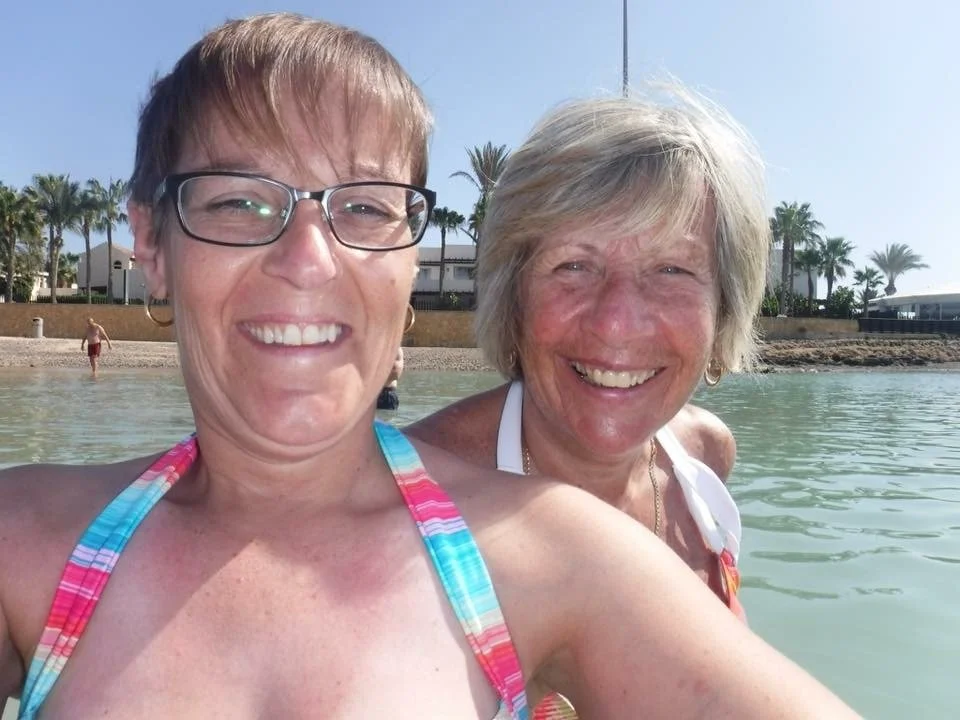
With her best friend GailA life that has had to change
Unfortunately, some changes have been frustrating. Joanne used to be able to walk for miles. Now she stops halfway up her staircase to catch her breath. She has bought a treadmill, determined to keep her legs and lungs working. Travel insurance is also out of reach — she hasn't been abroad in nearly eight years. Her brothers and sisters-in-law take her on breaks away. Her twin Rachael and brother-in-law take her out somewhere most weeks. "My siblings involve me in a lot of things," she says. "I have much love from everybody.
The shame of lung cancer
Sadly, Joanne has also faced something much more sinister: the blame that lung cancer uniquely faces. "People ask, did you smoke? And when I say yes, I’m told ‘oh, well, that's how you got lung cancer.’ Yet people can smoke and not get it. You can not smoke and still get it. The judgment and the shame are hard to take."
Joanne gave up smoking a couple of years before her diagnosis. Her father also had lung cancer, though he died of something else entirely. Joanne carries no guilt, and she does not want others to either.
Finding hope, making her voice heard
A few months after her diagnosis, while still in treatment, Joanne went to Wimbledon. Her family took her to the final —with what she calls "bum fluff" where her hair used to be. She loved every minute of it. There was something quietly defiant about being there: a woman in the middle of a terminal diagnosis, sitting in the summer sunshine, enjoying the tennis.
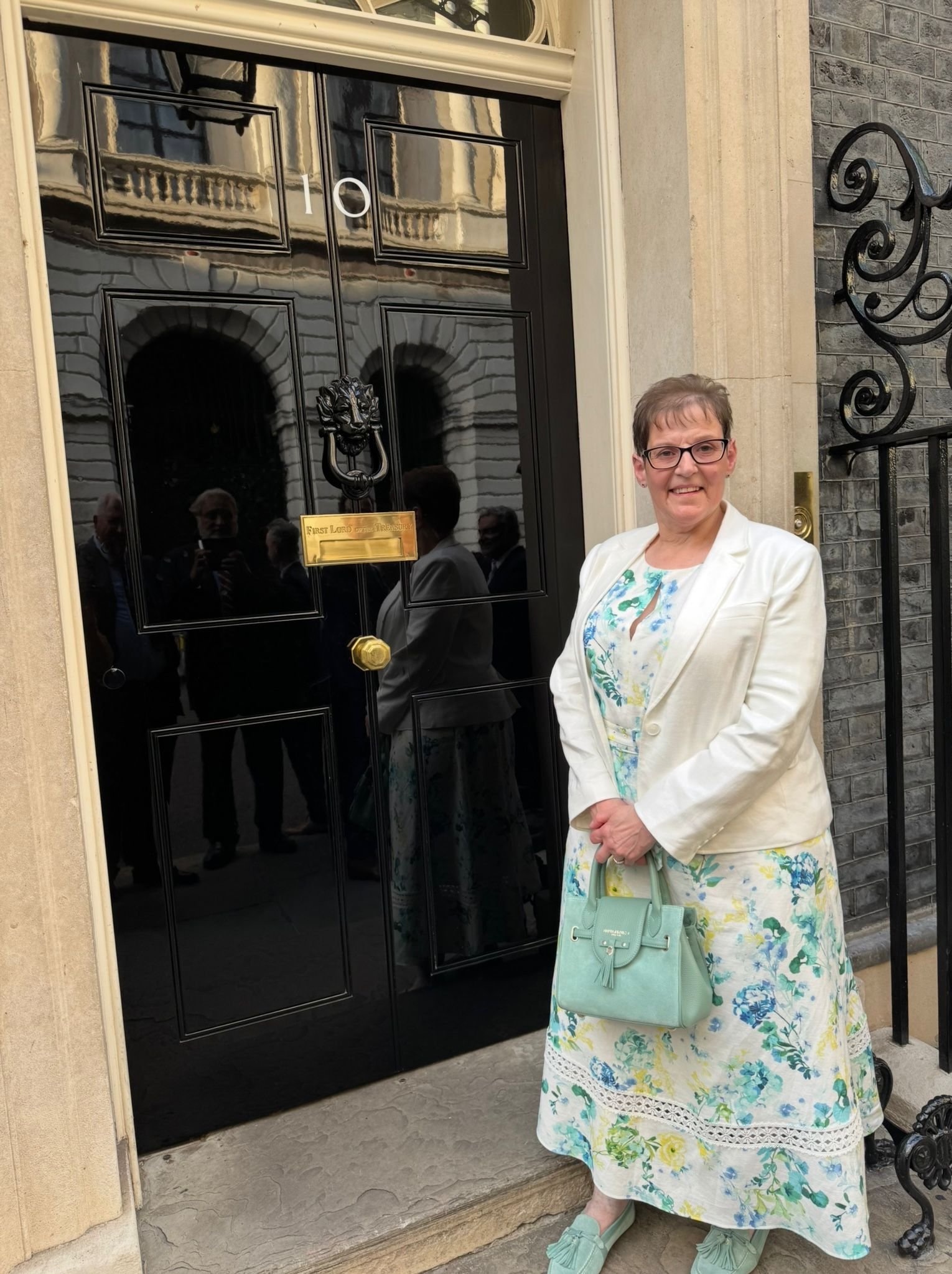
That spirit has carried her further. She has travelled to Downing Street with the Roy Castle Lung Cancer Foundation, standing up for patients like herself in the places where decisions get made. She has found community online with other small cell lung cancer patients — people who understand, without explanation, what this disease takes from you. On the harder days, when her own reserves run low, she draws real strength from watching others fight. "There are people out there who give you inspiration to keep fighting this," she says.
Joanne knows there are more treatments in development for small cell lung cancer now than there have been in years. She holds onto that hope.
I do have my moments. You never know what this lung cancer could do from one minute to the next. But you've just got to try and live a normal life.
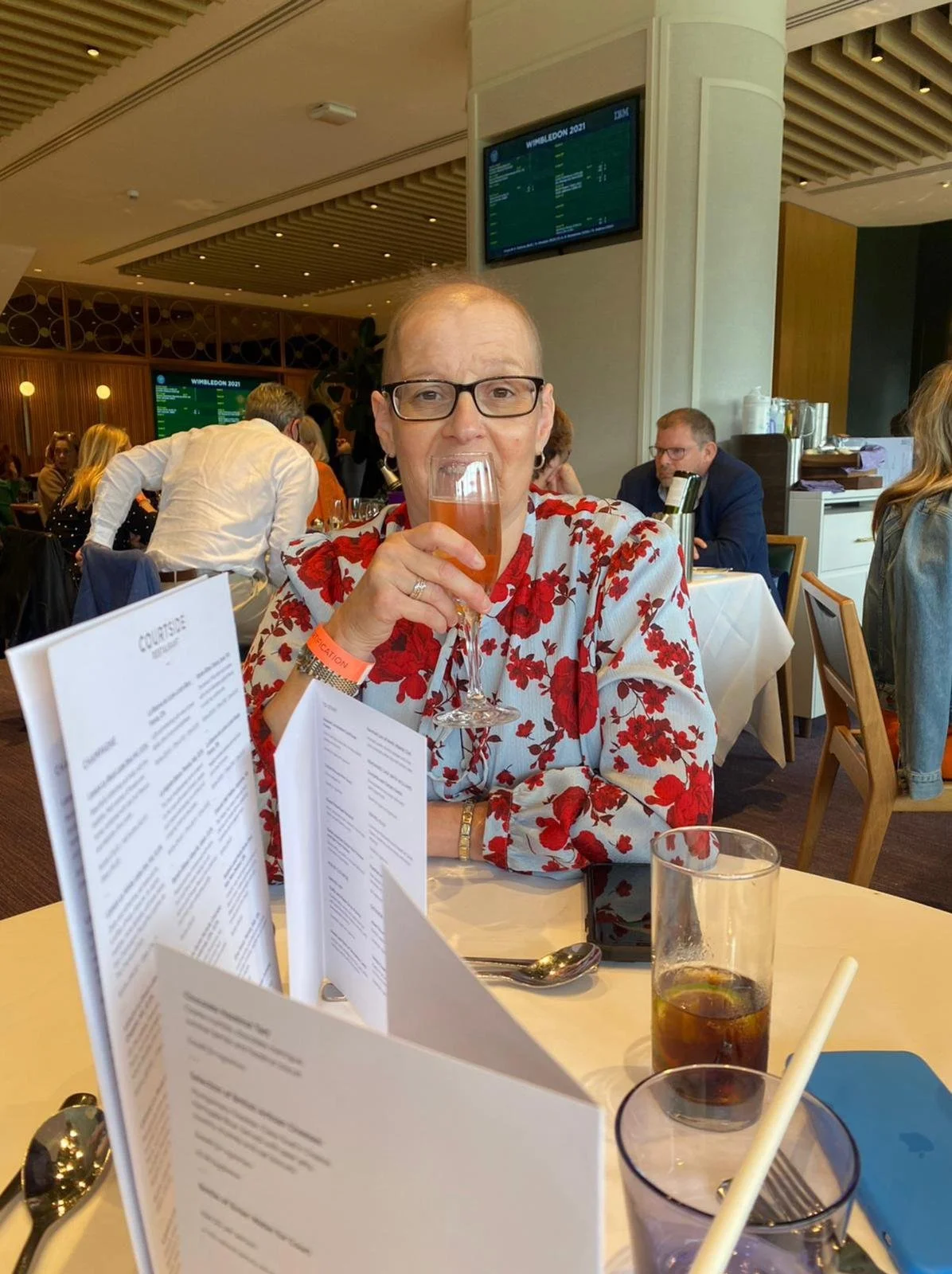
Enjoying Wimbledon mid-treatmentThe harder days
The last few months have been tough. Pain has increased – she describes her left side as feeling permanently heavy, full, different from the rest of her body in a way that is difficult to put into words and impossible to ignore. The St. David's Hospice Care team, referred through her cancer centre, has been coming to her home to help manage it. She is grateful they are there.
At night, alone, she confesses, "I do get a little bit scared. I live on my own. You do think things and have a bit of a meltdown, I suppose. But then I just get back to thinking about the future and not letting things worry me too much."
She often thinks of the people with small cell who have not made it as far as she has. Lovely people. It is heartbreaking. And it makes her own survival feel both precious and fragile.
Don’t wait
There are no grand speeches from Joanne Peake about surviving cancer. Mostly, she talks about work, family, getting through the day and trying not to let things overwhelm her.
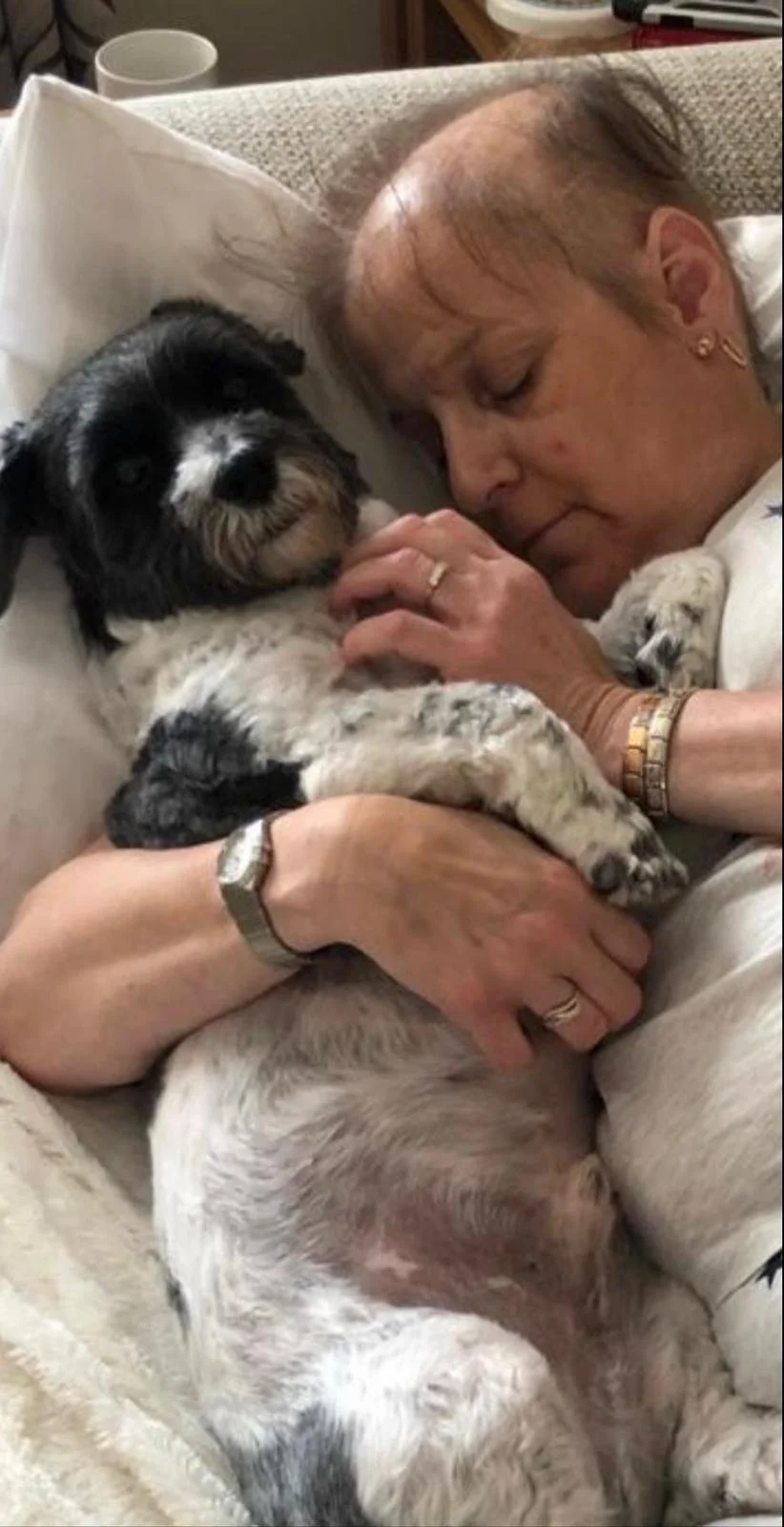
Five years on from a diagnosis that could have ended everything, Joanne Peake is still going to work. Still walking the dog. Still surrounded by her loving family, friends and community. Looking forward to turning 56.
And if there is one thing she wants others to know, it is this: Don’t ignore the signs.
Joanne knows how easy it is to keep putting one foot in front of the other and hoping things will improve on their own. She did exactly that.
“I was coughing up blood. I had headaches that wouldn’t go away. But you tell yourself it’ll pass,” she says. “You just can’t let it go. Get to the doctor straight away.”
Now, she just hopes her message will inspire others not to wait as long as she did.
May 2026